
Differenza in inglese
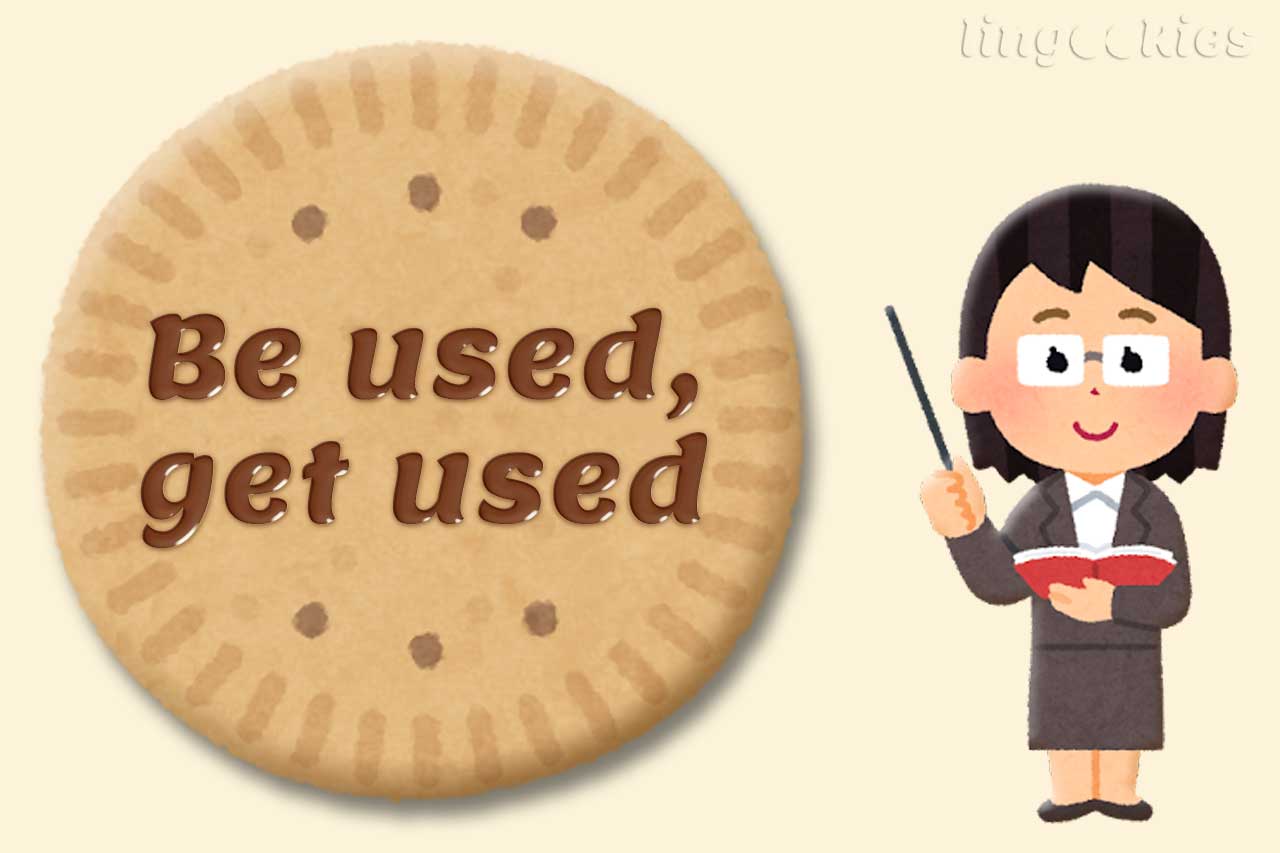
Be used to e get used to sono spesso confusi in inglese, ma non sono sinonimi.
| Be used to | Significa essere abituati |
| Get used to | Significa abituarsi |
Esempi
| I am used to speaking in public. | Sono abituato a parlare in pubblico. |
| I will never get used to speaking in public. | Non mi abituerò mai a parlare in pubblico. |
Attenzione: in inglese esiste anche l’espressione used to, che però non c’entra nulla con le altre due espressioni di cui parlerò in questo articolo. Se stai cercando una spiegazione di used to come sinonimo di would, vai alla lezione dedicata.
Be used to è uno stato, mentre get used to è un processo. Possiamo quasi dire che il secondo conduce al primo (dobbiamo prima abituarci a qualcosa per farla diventare abitudine!).
Sia be used to che get used to possono precedere un verbo, un sostantivo o un pronome.
Nel caso che a seguire le espressioni sia un verbo, dovrai coniugare questo verbo alla sua forma al gerundio -ing.

Con un verbo in -ing
| He’s used to living alone. | È abituato a vivere da solo. |
| He soon got used to living alone. | Si è presto abituato a vivere da solo. |
| We’re used to working overtime. | Siamo abituati a fare straordinari. |
| We will get used to working overtime. | Ci abitueremo a fare straordinari. |
Con un sostantivo o un pronome
| I’m still getting used to it. | Mi ci sto ancora abituando. |
| My eyes got used to the dark. | I miei occhi si abituarono al buio. |
| She got used to the new environment. | Si abituò al nuovo ambiente. |
| She’s really not used to the cold. | Non è davvero abituata al freddo. |

Domande e negazioni di be used to e get used to
La forma interrogativa e negativa di be used to e get used to rispecchia quella, rispettivamente, dei verbi to be e to get.
Be used to
| Be used to | Domanda |
|---|---|
| I am used to | Am I used to…? |
| He is used to | Is he used to…? |
| We were used to | Were we used to…? |
| Be used to | Negazione |
|---|---|
| I am used to | I am not used to |
| He is used to | He is not used to |
| We were used to | We were not used to |
| Are you used to Japanese food? | Sei abituato al cibo giapponese? |
| Was your brother used to going to bed early? | Tuo fratello era abituato ad andare a letto presto? |
| I am not used to Japanese food. | Non sono abituato al cibo giapponese. |
| My brother was not used to going to bed early. | Mio fratello non era abituato ad andare a letto presto. |

Get used to
| Get used to | Domanda |
|---|---|
| He gets used to | Does he get used to…? |
| We got used to | Did we get used to…? |
| I have gotten used to | Have you gotten used to…? |
| Have you got/gotten used to living abroad? | Ti sei abituato a vivere all’esterno? |
| Have you got/gotten used to the smell? | Ti sei abituato all’odore? |
| He still hasn’t got/gotten used to ignoring the noise. | Non si è ancora abituato a ignorare il rumore. |
| She still hasn’t got/gotten used to the time difference. | Non si è ancora abituata alla differenza di orario. |
Altre risorse gratuite di inglese
Dai un’occhiata alle altre risorse gratuite di inglese offerte da Lingookies:
Aiuta Lingookies con un 👍!

❤️ Se ti è piaciuta questa lezione sulla differenza tra be used to e get used to, condividila con i tuoi amici!